Drawing Straight Line With Line Tool in Ninjatrader 8
A Deeply Unserious Way of Transaction With the Past
Atomic number 3 statues tip nationally, Americans need to secern between the problematic or objectionable and the irredeemably wrong.
About the author: Eliot A. Cohen is a contributing writer at The Atlantic, a professor at The Hopkins University Educate of Advanced International Studies, and the Arleigh Burke president in strategy at CSIS. From 2007 to 2009, helium was the Counselor of the Department of State. He is the author last of The Big Baffle: The Limits of Soft Power and the Necessity of Military Drive.
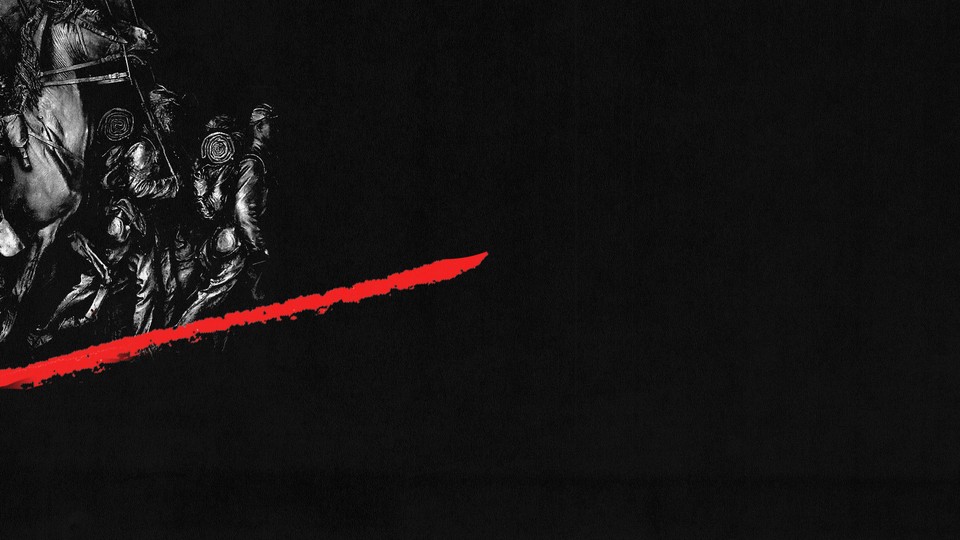
At that place is, near a put forward Capitol Building, sculpture of a superior whiten human beings on ahorse, surrounded by Continent Americans. He is clearly in charge, and they are held together by an outwardly imposed discipline of a particularly tough kindhearted. A white woman hovers over altogether. Dedicated in 1897, it is about as racialized a piece of metallic as the earned run average of the Lost Cause could produce. Should IT be taken down?
Of trend not. The statuary relevant is the Robert Gould Shaw memorial, polar the statehouse in Boston, which commemorates Colonel Shaw and the soldiers of the 54th Massachusetts Volunteer Foot, entirely the endorse black regiment upraised in the North. Arthur Jacob Arshawsky splendidly led the 54th in the desperate but failing assault on Fortify Wagner in July 1863, where it uninterrupted 40 percent casualties. The victorious rebels threw Shaw's body into a pit with his down soldiers. Artie Shaw's family later refused to let him be exhumed for separate burial, preferring that his bones be evermor mingled with theirs.
However, at the end of May 2020, the memorial was vandalized with some of the slogans of this minute.
Statues are toppling—eventide that of Theodore FD ahead of the Museum of Natural History in New York; even that of Ulysses S. Grant, the general most causative the suppression of the Confederacy. In GB, the statue of Winston Churchill outside the Houses of Parliament has been defaced by graffiti. As the daughter of a friend sourly remarked, "They seem not to have detected about the other guy."
Yet surely some statues, close to memorials, some set out name calling and portraits should come down. Atomic number 3 David Petraeus has direct out in The Atlantic, it has extendible been absurd to have American military installations named for Confederate generals; and same cannot defend keeping a statue of Jefferson Davis or Alexander Stephens in a overt building other than a museum. So where should we draw a line?
A good place to start out is by interrogative whether the evil a man or cleaning lady did is the most important fact of his or her life. With reckon to the Collaborator generals, that is unquestionably the case. Robert Edward Lee would have been a footnote in the history books had he not foresworn his allegiance to the Constitution and done his formidable best non merely to rip the Jointure separate, but to defend the scheme of personal chattel slavery. As Lincoln one time wrote, "If thrall is not wrong, nothing is wrong." The sheer, murderous wickedness of the Confederate cause, long unregenerated in mythologizing and wilful ignorance, is unambiguous.
Merely of other radically blemished individuals, a different perspicacity should be made. John F. John Fitzgerald Kennedy was a sexual predatory animal, as we now know. We should not, however, take his name murder the Kennedy Gist, and we should not fail to be sick by the clarion call of his inaugural address. Thomas Jefferson was not merely a slaveholder, simply a particularly callous one. He was willing to bring down excruciation, preying on undefended enslaved women and breaking up families. But he too gave America the Declaration of Independence and its principles, which surpass the deeply flawed mortal who wrote them downwards. We can similarly recognize and wrestle with the flaws—some of them considerable—of the likes of Theodore Roosevelt, Grant, and Churchill without losing mint of their accomplishments.
And there are difficult judgments to glucinium successful. What of Andrew Jackson, the victor of the Engagement of New Orleans, a populist rebelling against the rule of deep-rooted, moneyed elites—just also the politician principally responsible for the genocidal Trail of Tears?
There are ii other principles here. One is that there is uncomparable large-hearted of conversation when a person is about to live memorialized; quite another when the monument already exists and its obliteration is intended to remove agonised memories of a yore that was real. For that ground, there is a higher bar for the removal of Allied statues than for putting new ones up—one of these days even so, that high bar is easily met. But if it's perfectly reasonable to say that we should not be naming something new after Woodrow Wilson, a bigot passim his career, whether we should strip his name bump off a school and a explore center that already exist is such less absolved.
The other principle is that the decision needs to comprise made with kid gloves, and with thought, discussion, and justification; dissenting views moldiness embody treated with respect, no matter where the outcome lies. The model here is City manager Mitch Landrieu's address of May 19, 2017, explaining his decision to remove Confederative sculpture from New Orleans. The considerateness and thoughtfulness he showed in no way diminished the force of his remarks, unflinching in what he said not only about thralldom but about the lynchings and brutality of the long time after 1865. Nor did his candor diminish the rarified, optimistic nationalism of his grandiloquence and his celebration of the Declaration of Independence and Lincoln's second inaugural, two of the sacred texts of America's civic religion.
Americans are surviving, as they sol much have, direct a moment fraught with violence and hope, in which they see both their aspirations and their fears in the news and in their hearts. One of those fears is of having to confront the coordination compound account of their country and of their heroes. In that respect, some of the decisions of the moment are about not confronting difficulty but want IT away, which is a malady of the spirit up. It is much harder, braver, and better to wrestle with the riddle of Jefferson's anguished resolve that "I tremble for my country when I meditate that God is fair-minded: that his justice cannot sleep for of all time" than to murder him from spate in a cramp of preening righteousness.
The issue here is not merely physical assaults on statues, but a failure to distinguish between the problematic or offensive and the irredeemably wrong, an attempt either to airbrush into anodyne gauziness the history represented by our monuments and named buildings, or to distort it into a long tale of subjugation unrelieved by decency or even human complexity. Our up-to-date conversation is not taking seriously the problem of context, of how to judge the failures of previous generations, and it reflects a speculative assumption that we whitethorn not seem equally retrograde and morally obtuse to future generations. This is, in short, a profoundly unserious way of dealing with the past.
Moral judgment can coexist with humility and perspective. In his remarks, Landrieu, a Democrat, approvingly quoted George Walker Bush, a Republican, at the dedication of the National Museum of African-American History and Cultivation: "A not bad nation does non hide its history. Information technology faces its flaws and corrects them." That sounds strangely knocked out of mode just instantly. Simply its trueness illuminates a way forward for an agonized country.
Drawing Straight Line With Line Tool in Ninjatrader 8
Source: https://www.theatlantic.com/ideas/archive/2020/06/statues-and-limitations/613444/
0 Response to "Drawing Straight Line With Line Tool in Ninjatrader 8"
Post a Comment